Neva Masquerade: the Siberian colorpoint, explained
What colorpoint actually means on a Siberian, when the markings finish developing, and what it does and doesn't change about registration, health, and price.
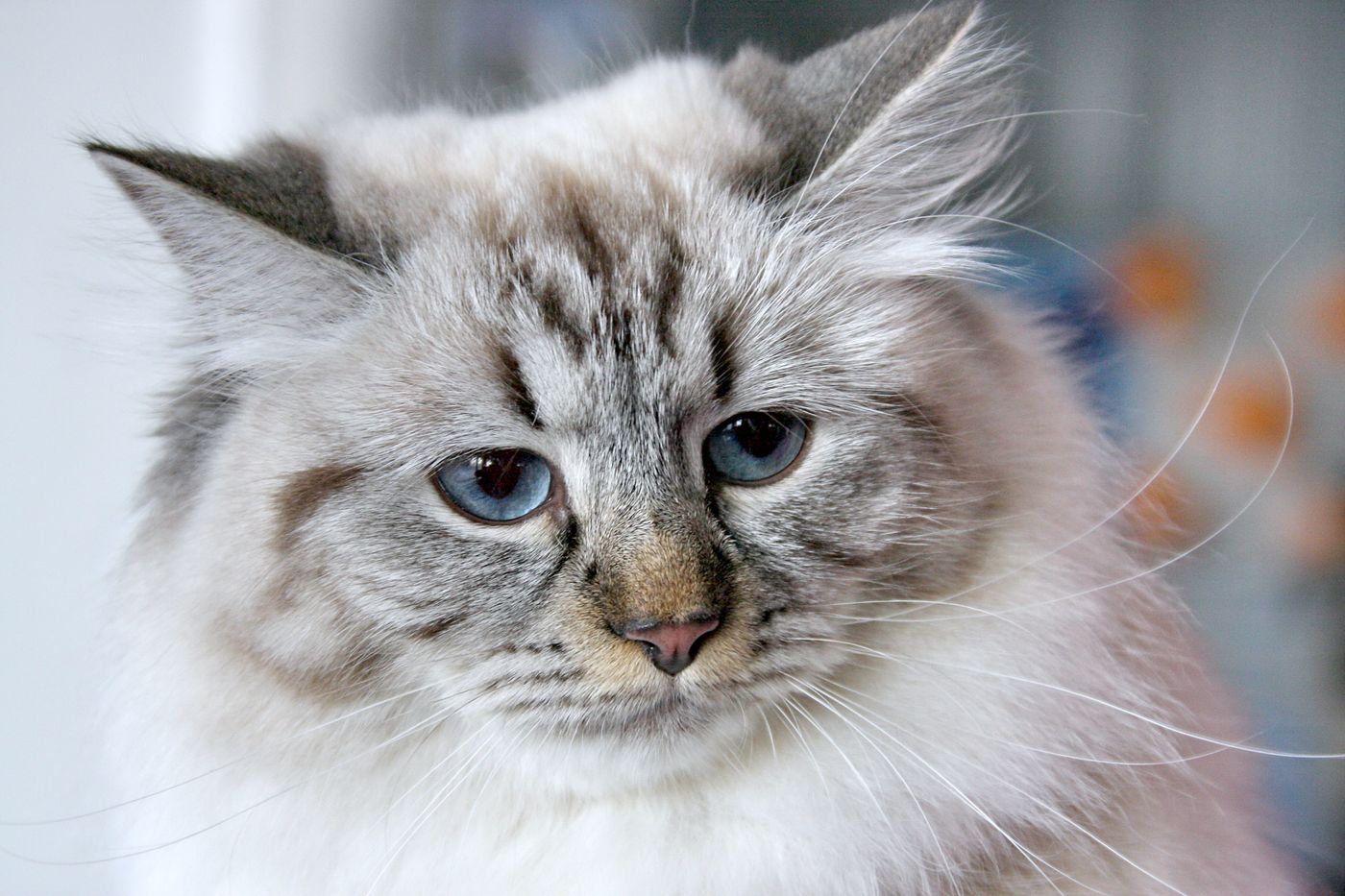
Every kitten on this site is a Siberian first. Colorpoint, sometimes called Neva Masquerade, is a coloring within the breed, not a different cat. If you're looking at a litter with a paler body and a darker face and mask, here's what that actually means, and what it doesn't.
What colorpoint means, and what registry you're dealing with
Colorpoint describes a pattern: a lighter body with color concentrated on the face, ears, legs, and tail. Some international registries, FIFe and WCF among them, register this coloring under its own breed name, Neva Masquerade. TICA and CFA, the two registries most US buyers will actually run into, register it as a coat color within the Siberian breed rather than a separate breed. That distinction matters at the paperwork stage: if a breeder's registration lists "Siberian, colorpoint" rather than a separate breed name, that's consistent with TICA/CFA convention, not a red flag. Our kitten-choosing checklist already covers asking for TICA or CFA registration paperwork before you commit; colorpoint doesn't change that step, it just means reading the color field on the form rather than expecting a different breed name.
Born nearly white, and why the final look takes time
Colorpoint kittens are born close to white, or very pale, with almost no visible pattern. The points darken gradually as the kitten grows, the same way a Siamese kitten's mask fills in over its first months. There's no published week-by-week timeline for exactly how long that takes in Siberians specifically, which is exactly why it's worth being upfront about: don't judge a kitten's eventual coloring from a photo taken at 8 to 10 weeks, when most of the litter is still going home. Ask the breeder what the parents look like as adults, and expect the points to keep darkening for months after you bring the kitten home, not days.
Why the pattern lands where it does
The colorpoint gene is heat-sensitive. It suppresses pigment on the warmer parts of a cat's body and allows more pigment where the skin runs cooler, the face, ears, legs, and tail. That's the same underlying mechanism that gives Siamese cats their pointed pattern, and it's why a colorpoint Siberian kept somewhere cool can darken further as an adult; the coloring isn't locked in for life at the kitten stage. Blue eyes are strongly associated with this pattern in Siberians, the same as in other colorpoint breeds. If a kitten has visibly darker points but eyes that aren't blue, it's a fair, specific question to ask the breeder rather than something to assume either way.
Does it cost more, or come with different health considerations?
No health issue specific to colorpoint has been documented beyond what applies to Siberians as a breed, including the HCM echocardiogram and PK-deficiency screening our health-testing guide covers in full. Color doesn't substitute for that testing, and a breeder shouldn't price a colorpoint kitten higher on health grounds. It's fair for colorpoint and other less common colors to run toward the higher end of a breeder's stated range simply because they're less common; our own pricing guidance already flags rarer colors as a reason a kitten might land above the $1,500 to $2,500 baseline. That's a supply-and-demand fact, not a quality or health claim.
A colorpoint Siberian is still a Siberian. Ask for the same TICA or CFA registration paperwork either way.
Don't judge final coloring from an early kitten photo. Points darken over months, not days.
A higher price for a colorpoint kitten reflects rarity, not extra health testing. Ask about HCM and PK-deficiency screening regardless of color.
Our full kitten-choosing checklist covers what to ask a breeder before you commit, and the health-testing guide goes deeper on HCM and PK-deficiency screening regardless of coat color.
Questions people ask about this
What is a Neva Masquerade?
It's a Siberian cat with colorpoint markings: a paler body with darker color concentrated on the face, ears, legs, and tail. Some registries (FIFe, WCF, and a few others) treat it as its own breed name. TICA and CFA, the two registries most relevant to US buyers, treat colorpoint as a coat color within the Siberian breed, not a separate breed. Ask a breeder which registry they use before assuming the terminology matches.
Are colorpoint Siberian kittens born white?
Close to it. Colorpoint kittens are born nearly white or very pale, and the darker points develop gradually as the kitten ages. There is no fixed week-by-week schedule published for the breed, so don't judge a kitten's final coloring off an early photo or a first look at 8 to 10 weeks. Ask the breeder how the parents turned out and expect the kitten's points to keep darkening for months.
Why do colorpoint cats have darker faces, ears, and legs?
The colorpoint gene is heat-sensitive: it produces less pigment on the warmer parts of the body and more pigment on the cooler extremities, the face, ears, legs, and tail. It's the same gene family that gives Siamese cats their point pattern. A colorpoint Siberian kept in a cooler climate can darken further as an adult; the pattern isn't fixed for life at the kitten stage.
Do colorpoint Siberians have blue eyes?
Typically yes. Blue eyes are strongly associated with the colorpoint pattern in Siberians, same as in Siamese-derived breeds. A Siberian with visibly darker face and ear points but non-blue eyes is worth asking the breeder about directly, since that combination is less typical of the standard colorpoint presentation.
Does colorpoint affect health or cost more?
No health issues specific to colorpoint have been documented beyond what applies to Siberians generally, including the HCM screening every reputable breeder should already be doing. Colorpoint and other less common colors sometimes carry a higher price than a standard brown tabby, in line with our own stated $1,500 to $2,500 range running toward the higher end for rarer colors. Price alone isn't a health or quality signal either way.
See kittens from parents with paperwork to match
Every kitten featured on this site comes from parents this cattery states are HCM and PK-deficiency tested, whatever the coat color. Ask to see the registration paperwork before you pay a deposit.